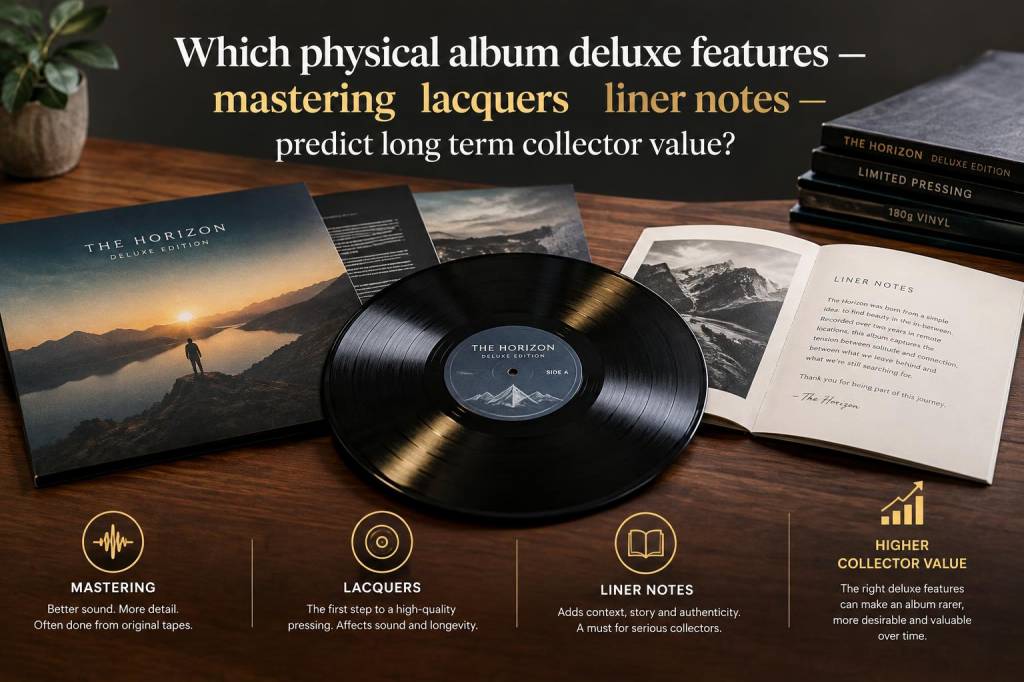
I still remember the first deluxe vinyl I chased down: a heavy 2LP gatefold with a tipped-in art print and a sticker announcing “Mastered from the Original Analog Tapes.” I shelled out more than I usually would and slept on the packaging, convinced I’d made a wise long-term bet. Years later, that record sits in pristine condition in my collection — and its value has quietly appreciated. Over the last decade of covering music and obsessing over collector communities, I’ve learned which deluxe features genuinely move the needle for long-term value, and which are mostly marketing glitter.
What collectors actually pay for
Collectors buy a narrative as much as an object. That narrative is built from rarity, provenance, sonic pedigree, and aesthetics. When an album deluxe package offers verifiable proof it’s special — a unique mastering source, limited-run lacquer cuts, hand-numbered sleeves, or original-era extras — it becomes a story that’s easy to tell and easy to sell later.
From my experience speaking with indie label owners, mastering engineers, and resellers, these are the features that consistently forecast better long-term value:
- Mastering provenance — who mastered it and from what source
- Lacquer and cutting details — whether lacquers were cut on vintage equipment or by notable cutters
- Limited runs and numbering — clearly quantified scarcity
- Physical extras and archival materials — posters, booklets, handwritten notes, or demos
- Signatures and artist involvement — signed, approved, or curated by the artist
- Unique packaging and manufacturing choices — splatter/colour variants, heavy vinyl, tip-ons, die-cuts
Mastering: the single most persuasive sonic claim
“Mastered from the original tapes” or “half-speed mastered” often appears on deluxe stickers. But not all mastering credits are equal. When a release is mastered by a recognized name — think Bob Ludwig, Greg Calbi, or specialists at Mobile Fidelity (MoFi) and Analogue Productions — collectors pay attention because those brands signal consistent quality and a community that respects sonic lineage.
What matters most is provenance: was the master derived from the original analog tapes, from the producer’s safety copy, or from a modern digital file? Analog tape source + an acclaimed mastering engineer typically equals higher desirability. Half-speed mastering and direct metal masters (DMM) can also add cachet, especially if documented clearly. For instance, reissues that specify “half-speed mastered at Abbey Road” carry a tangible story and tend to retain or grow in value.
Lacquers and cuts: why who cut the lacquer matters
Collectors of vinyl love to geek out about lacquers. A lacquer cut by a well-known cutter or cut on vintage Neumann lathes is a technical claim that often translates into higher demand. Names like Bernie Grundman, Kevin Gray, or Ryan K. Smith pop up in discussions because they’re associated with particular sound aesthetics and consistent quality. If the deluxe package lists “lacquers cut by [name] at [studio],” that’s proof for the narrative.
Limited lacquer variants — for example, a small batch cut on vintage machines or on a specific lacquer supplier — can become sought-after, especially if the artist endorses the process. Beware of vague claims: “audiophile lacquer” without specifics rarely moves the market.
Liner notes, essays and archival booklets
I’m a sucker for long liner notes. Essays by respected music journalists, rare photos, session logs, or transcripts of studio conversations turn a deluxe edition into an archival object. For many buyers, these extras are the main attraction: they add context and rarity beyond the music itself.
High-quality paper, sewn binding, and exclusive essays — especially those including interviews or previously unpublished material — significantly increase a release’s collectible value. The more unique and research-driven the content, the more future collectors and historians will prize it.
Limited pressings, numbering, and variant strategies
Limited editions are the most straightforward driver of scarcity. A numbered edition of 500 is inherently more collectible than a standard unlimited reissue. Variants (colour runs, special splatter patterns) drive immediate demand, especially when a label communicates exact quantities for each variant.
However, artificial scarcity can backfire. When labels release dozens of variants in excessive numbers, the market fragments and long-term value can suffer. The best balance is a small number of well-documented variants — for example, 250 black, 100 clear, 50 artist-signed — rather than 20 different colours in runs large enough to flood secondary markets.
Signatures, test pressings and provenance documents
Hand-signed sleeves, included certificates of authenticity, or even photos of the artist signing a batch make ownership feel unique. Test pressings and acetate lacquers carry an extra premium because they’re often one-off or low-run proof items connected to the mastering chain. If a deluxe edition includes a copy of the original studio log or a reproduced tour pass, those tangible links to the album’s history elevate its collectible potential.
Packaging quality and manufacturing choices
Collectors prize tactile quality: tip-on gatefolds, heavyweight 180–220g vinyl, cloth-bound booklets, and embossing. Those manufacturing choices resist wear and signal an investment in longevity. A flimsy inner sleeve versus a thick anti-static sleeve can make a world of difference when someone inspects condition years later.
Also, limited-run manufacturing quirks — like misprinted covers or unique die-cuts — sometimes become accidental collectables. I’ve seen misprints sell for multiples simply because they’re distinctive and few in number.
Examples and how they behaved on the secondary market
I won’t pretend every special feature guarantees profit. Some artist-signed reissues sit for years before finding a buyer; others skyrocket because they intersect with cultural moments (a viral documentary, a major film placement, or an artist’s sudden passing). Here are a few patterns I’ve observed:
- Reissues with clear analog tape provenance, a reputable mastering engineer, and thorough liner notes tend to hold value better than mass-market remasters.
- Small-run lacquers or acetates tied to well-known mastering houses often become short-run collector staples — desirable among audiophile communities.
- Signed editions and test pressings fetch strong premiums but depend heavily on the artist’s continued profile and the clarity of authentication.
- Overproduced “limited” colour variants typically lose value if a label reissues the colours later or if the quantities aren’t truly limited.
How I decide what to buy
When I’m weighing a deluxe purchase, I ask a few practical questions: Is the source of the audio documented? Who mastered and who cut the lacquers? Are the quantities clearly stated? Does the packaging include unique archival materials or artist involvement? If the answers point to transparency and rarity, I’ll consider pulling the trigger.
I also factor in condition and storage: even the most desirable release can lose value if it’s been poorly stored. For collectors, provenance — receipts, photos, and original shrinkwrap — also strengthens future resale positions. If I can, I buy the best condition available and keep it that way.
Quick reference table: features vs long-term value impact
| Feature | Predictive Value | Notes |
|---|---|---|
| Original tape mastering | High | Provenance + reputable mastering engineer = strong demand |
| Lacquer/cutter credit | High | Named cutters and vintage equipment raise desirability |
| Numbered limited press | High | Clear, small-run numbering preserves scarcity |
| Extensive liner notes/archives | Medium-High | Unique research adds historian/collector appeal |
| Colour variants (mass) | Low-Medium | Depends on true scarcity and label restraint |
| Signatures/test pressings | High but variable | Authentication and artist profile vital |
In short, I look for transparency, documented rarity, and real ties to the music’s original creation. Mastering and lacquers give an album an audible pedigree; liner notes and archival content give it a historical pedigree; limited pressings and signatures give it market scarcity. Combine two or more of those and you’re much more likely to own a deluxe edition that endures — as an object of affection and as a piece that holds value over time.