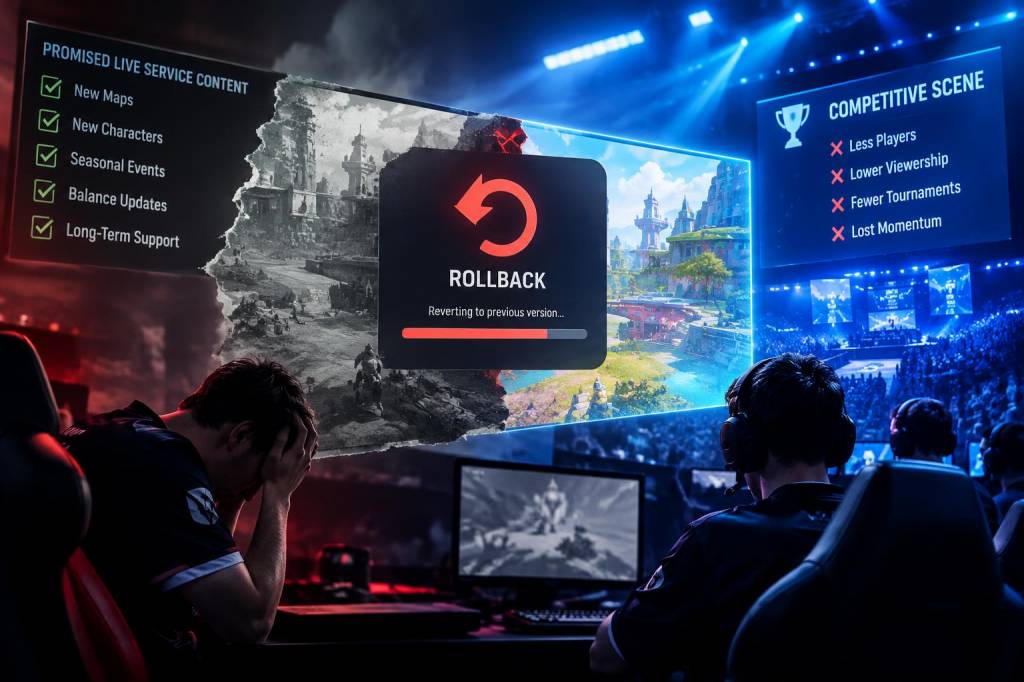
I remember the first time a live-service update completely upended a game's competitive landscape: a patch promising balance and new modes arrived, players adapted strategies overnight, tournaments recalibrated brackets — and then the studio hit “rollback” and restored the older build. The chaos that followed wasn't just about lost hours; it exposed how fragile competitive ecosystems are when player trust, progression systems, and esports infrastructure collide. That experience made me wonder: can a single rollback to promised live-service content realistically destroy a game's competitive scene? The short answer is rarely instantly — but the ripple effects can be devastating if mishandled.
What do we mean by “rollback” and why studios do it?
A rollback can refer to a few things in live-service games, but in this context I mean a developer reverting the live game to a prior state or to content that had been “promised” but wasn’t working as intended. Reasons vary: serious bugs, server stability, exploits discovered after a patch, legal or contractual issues (think licensed content), or even miscommunication where developers publish content before it's ready.
Studios often choose a rollback as a damage-control tool — better to revert to a stable state than let a catastrophic issue spread. But stability comes at a cost: lost progress, confused ranking systems, and a credibility hit that competitive scenes remember.
Immediate technical and competitive impacts
Why one rollback usually doesn’t “destroy” a scene — but it can undermine it
Competitive ecosystems are resilient by design: teams pivot, orgs plan for volatility, and tournament bodies build contingencies. A single rollback rarely ends everything because the pro scene has incentives to continue — sponsorships, prize pools, and the career momentum of players. However, a rollback can undermine the essential trust and momentum that keep those incentives healthy.
Trust is a soft resource that fuels community engagement. If players feel the developer can't deliver a stable competitive environment, they stop investing time and money. Viewership dips, sponsors get cautious, and organizers may start diversifying into more reliable titles. This slowly starves the scene rather than instantly killing it.
Case patterns where rollbacks were especially damaging
Examples and analogues from live-service history
I won’t pin specific company mistakes on single rollbacks — many incidents are complex — but across games like multiplayer shooters, MOBAs, and hero shooters, we’ve seen the same patterns: a botched update, followed by a rollback or hotfix, followed by community backlash. What matters more than the incident itself is how the studio responds: transparent apology, concrete compensation (in-game currency, cosmetics, rank protection), and a roadmap to prevent recurrence go a long way to maintaining a healthy competitive base.
How a rollback can indirectly “kill” competitiveness over time
What developers and organizers can do to avoid catastrophe
A short comparative table: rollback outcomes
| Scenario | Short-term impact | Long-term risk |
|---|---|---|
| Transparent rollback + prompt compensation | Player frustration but rapid placation | Low—trust can rebound |
| Silent rollback + lost purchases/ranks | High anger, PR crisis | High—churn and sponsor loss |
| Rollback exposing systemic issues | Immediate instability in tournaments | Very high—scene migration likely |
I’ve seen communities forgive and rebound from pretty dramatic missteps when studios own the error and act decisively. Conversely, I’ve also seen once-thriving competitive scenes hollowed out over a year of sloppy updates, poor communication, and recurring rollbacks. So while a single rollback won't usually obliterate a competitive scene overnight, it can be the start of a slow hemorrhage if it undermines trust, disrupts incentives, and isn’t treated with the seriousness competitive ecosystems demand.