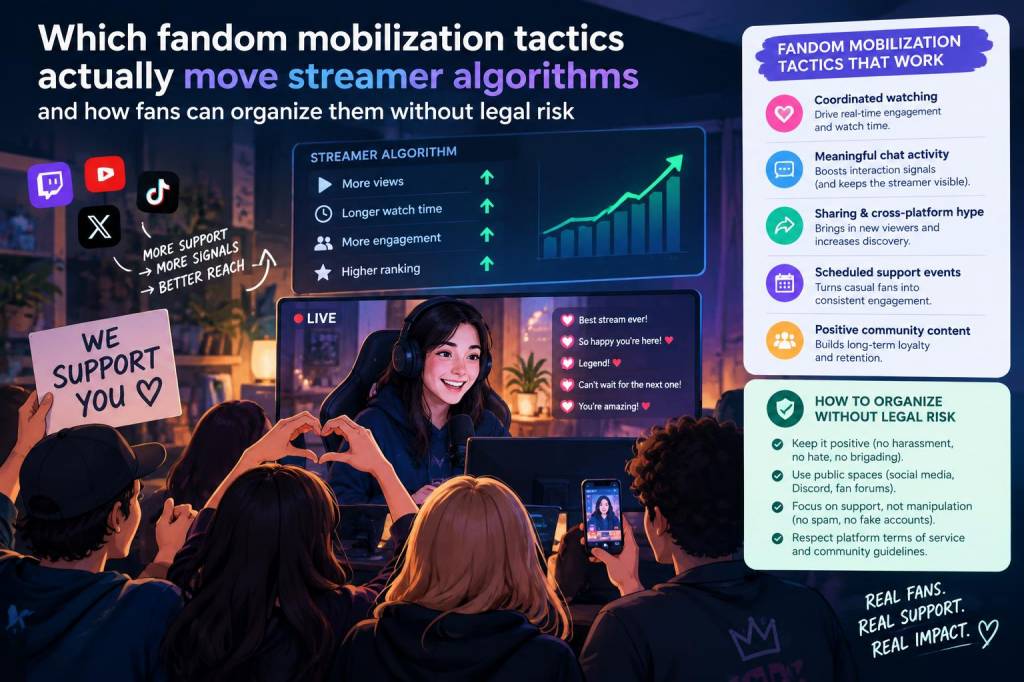
Algorithms don’t have hearts, but they do respond to patterns — watch time, engagement bursts, repeat views, and the way traffic arrives. Over the years covering fandoms, I’ve seen grassroots campaigns genuinely move the needle for shows and creators on streaming platforms like Netflix, Disney+, TikTok, and Spotify. But I’ve also watched well-intentioned efforts backfire when they crossed legal or platform rules lines. Below I share practical tactics that actually influence streamer algorithms and, just as importantly, how fans can organize those tactics safely and legally.
What algorithms actually reward
Understanding what streaming and social platforms measure is the first step. While each service is different and proprietary, most prioritize a combination of the following signals:
- Watch time / completion rate: The longer people stay, the more likely a title is promoted.
- Velocity: Sudden spikes in views or engagement (comments/likes) signal something is trending.
- Repeat and sustained engagement: Regular, distributed traffic over days/weeks is rewarded more than a single burst.
- Cross-platform traction: Social buzz driving people to the streamer (search volume, links) helps discovery.
- User retention metrics: New subscriber behavior and whether content keeps them on the platform.
Tactics that reliably move algorithms
Not all fandom actions are equal. Here are tactics I’ve seen work in the real world, broken down by how they influence algorithmic signals.
Coordinated viewing windows
Scheduling group watch times — especially across time zones — creates velocity and watch-time spikes. If a show has 5,000 fans who agree to watch episode 1 within a specific 2-hour window, that concentrated activity can trigger “trending” thresholds on platforms that surface popular titles.
- How to do it safely: Use public scheduling tools (Google Calendar invites, Twitter threads, Discord event channels) and encourage natural viewing from members' own accounts. Never share login credentials or ask people to use the same account.
- Pro tip: Encourage people to watch full episodes, not just trailers. Completion matters.
Hashtag amplification and UGC campaigns
User-generated content (UGC) on TikTok, Instagram Reels, and YouTube Shorts can drive discovery. A flood of short videos using a specific hashtag or sound clip creates cross-platform traction and search volume that benefits the streamer.
- How to do it safely: Provide creative prompts, a short list of approved clips or sounds (where licensing permits), and best-practice examples. Avoid asking fans to repost copyrighted full episodes or fan edits that reuse unlicensed footage.
- Pro tip: Community challenges — e.g., reenact a scene, remix a soundtrack snippet — are low-friction and high-impact.
Ratings and review pushes
Ratings on platforms (where applicable) and reviews on aggregator sites can influence recommendation systems indirectly by shaping discoverability and SEO. Many fans coordinate “rating days” to leave thoughtful reviews.
- How to do it safely: Encourage honest reviews from real viewers. Platforms monitor for review manipulation (multiple reviews from the same IP or template copy-paste), so push authenticity and diversity in perspectives.
Search and backlink campaigns
Driving search interest — people Googling “Show Name episode 1” or linking to reviews and articles — can lift a title in discovery. This is where blogs, fan sites, and mainstream press amplification matters.
- How to do it safely: Share official trailers, interviews, and legitimate press links. Avoid spammy link-farming; it triggers search engine penalties.
Community engagement on platform-native features
Using platform features — e.g., Netflix’s “My List,” YouTube playlists, or Twitch raids — signals interest. Coordinated actions that leverage these features (adding to lists, saving, or playlisting) can subtly boost ranking signals.
- How to do it safely: Teach fans how to use these platform tools and why they matter, instead of asking them to manipulate backend systems or use bots.
Comparing impact vs. risk: a quick table
| tactic | algorithmic impact | legal/platform risk |
|---|---|---|
| Coordinated viewing windows | High (watch-time spike) | Low if individual accounts used; high if account-sharing/bots |
| UGC hashtag campaigns | Medium-High (cross-platform traction) | Low if original content; medium if copyrighted clips used |
| Rating/review pushes | Medium (discoverability + SEO) | Medium if inauthentic/review manipulation |
| Search/backlink drives | Medium (SEO and external traffic) | Low if organic; high if spammy |
| Using platform-native features | Medium (signals to platform) | Low if manual; high if automated |
How fans can organize without legal or platform risk
There’s a clear line between clever coordination and crossing into prohibited activity. Here’s a practical checklist I use when advising fandoms:
- No sharing of credentials: Never ask people to use shared logins or distribute passwords. That violates terms of service and can get accounts suspended.
- Avoid automation and bots: Automated views, scripted likes, and bot-generated comments may yield short-term gains but lead to penalties and account bans.
- Respect copyright: Use short clips under fair use carefully, link to official sources, and encourage original fan content like reactions, reviews, art, and cosplay instead of ripping and reposting episodes.
- Promote authentic behavior: Templates are fine for accessibility, but push fans to personalize reviews and posts. Platforms flag identical or repetitive content.
- Be transparent with organizers: If you’re running a campaign, publish clear rules and expectations so participants understand what’s allowed.
- Work with creators and rights-holders when possible: Some production teams welcome fan campaigns and may supply assets, promo codes, or official hashtags. That reduces risk and amplifies reach.
Organizational tools that help — and are safe
These are low-risk ways to coordinate that don’t invite platform penalties:
- Discord servers with event channels and pinned instructions.
- Public Google Calendar events or Facebook Events for watch parties.
- Tweetstorms and scheduled posts (using native platform schedulers or trusted tools like Hootsuite) but avoid mass identical copies.
- Shared resource pages (Notion, Google Docs) with creative prompts, captions, and example hashtags.
Examples from the field
I’ve watched an indie show climb Netflix’s “Top 10” after a months-long, low-key campaign: fans organized weekend watch parties, created short TikToks that tied a character’s moment to a trending sound, and coordinated with a music blogger to highlight the show’s soundtrack. The key was sustained, diverse activity — not a single artificial spike.
Contrast that with campaigns that demanded mass account-sharing to unlock “bulk streaming” — platforms quickly penalized accounts, and fan communities suffered. The takeaway is simple: build genuine, creative momentum, not mechanical manipulation.
When to seek professional help
If you’re a larger fandom or organizing cross-border campaigns involving significant funds (ads, merchandise giveaways), consult a lawyer or an experienced PR professional. There are legal issues around sweepstakes laws, data privacy, and commercial promotion that vary by country. For grassroots efforts, common sense and transparency usually keep you safe.
At the end of the day, platforms amplify what looks legitimate and engaging. Fans have tremendous power — but the most sustainable wins come from creativity, honesty, and steady grassroots energy. That’s the kind of fandom I love covering and cheering on: clever, passionate, and careful enough to stay in the game for the long run.