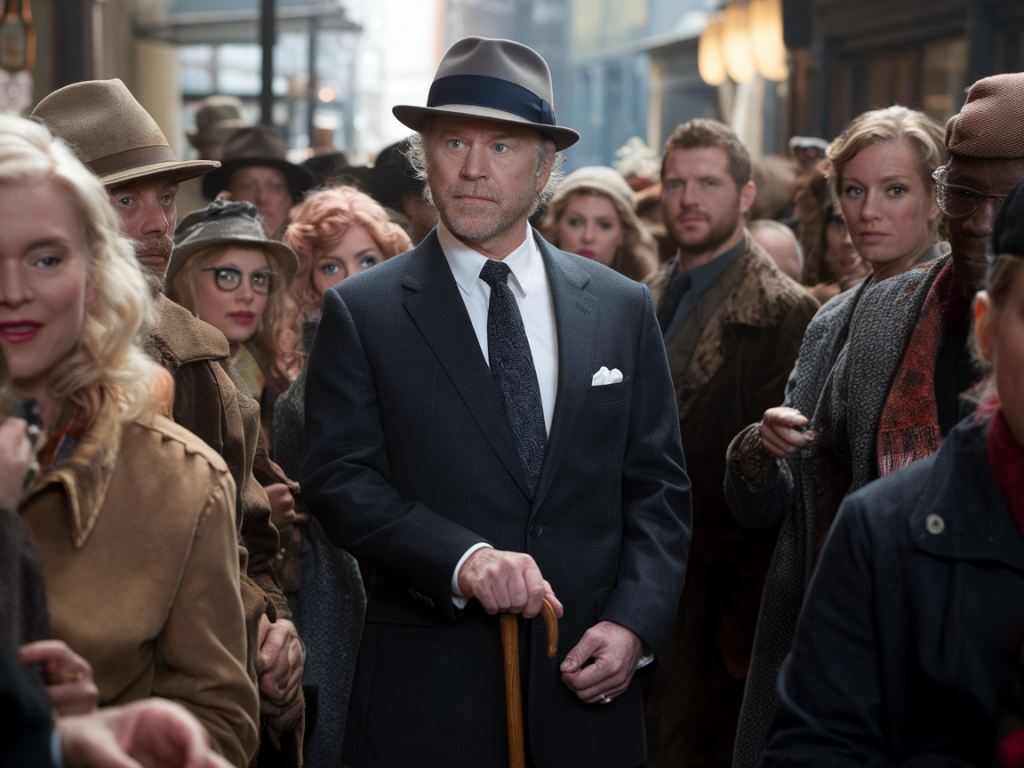
I’ve always loved those little surprises that make moviegoing feel like shared tradecraft — the wink from a director in a single-frame appearance, the secret handshake between filmmaker and audience. But over the last decade, with fandoms hyper-attentive and social media amplifying every blink-and-you-miss-it moment, director cameos have become a fraught shorthand: sometimes they’re a brilliant, moving punctuation mark in a franchise finale; sometimes they’re obvious stunt casting meant to generate headlines and clicks.
What I look for when a director shows up on screen
When a director appears in their own movie — especially in a franchise finalé where stakes and expectations are sky-high — I ask a few simple questions that help me decide whether the cameo is a creative win or a cheap trick:
Examples that work
Some of my favorite director appearances succeed because they feel intrinsic to the movie’s DNA rather than tacked-on stunts.
When a director cameo becomes stunt casting
Stunt casting happens when an appearance is engineered to dominate publicity, not to enhance the film. In franchise finales, the temptation is acute: a single surprise cameo can trend for days, driving pageviews and social chatter. That’s fine as marketing — but it’s not fine when it compromises storytelling. Here are common signs of stunt casting:
How franchise finales raise the stakes
Franchise conclusions are unique because they have to simultaneously satisfy longtime fans, complete narrative arcs, and often set the stage for a legacy — or spin-offs. A director cameo in that context is risky: if it’s meaningful, it can elevate a finale to mythic status; if it’s empty, it can feel like a betrayal.
When I watch a finale, I’m sensitive to the way every choice reverberates across fandom. A cameo from a beloved creator can function as an authorial benediction — a final “thank you” from the person who shepherded the story. But it becomes performative when the cameo overshadows the characters who earned the story’s ending.
Practical criteria for judging a cameo in a finalé
| Criteria | Why it matters | Creative win example | Stunt casting example |
|---|---|---|---|
| Story integration | Ensures cameo supports narrative | Embedded, meaningful touch | Self-contained spectacle with no payoff |
| Tonal fit | Prevents jarring shifts | Matches film’s voice | Feels like an ad-libbed gag |
| Fan value vs. narrative value | Balances fan happiness with story closure | Enhances emotional closure | Only gratifies fandom trivia |
| Longevity | Will the cameo age well? | Timeless or subtle | News-cycle dependent |
Tips for filmmakers (and for viewers who want to call bullshit)
I don’t want to police joy — there’s legitimate pleasure in spotting a director in a quick scene. But as someone who covers fandom and pays attention to how stories land, I care about the promise of a finale: closure, not spectacle-for-spectacle’s-sake. When a director’s cameo deepens the story, it can become one of those small, satisfying fireworks that make movie endings feel like gatherings. When it’s stunt casting, it’s an echo chamber of coverage that leaves the film itself quieter for it.
So next time you spot a familiar face in the last reel, ask whether you’re witnessing an author signing the back of the book — or a billboard flashing across the horizon. The best cameos feel like signatures. The worst feel like billboards.