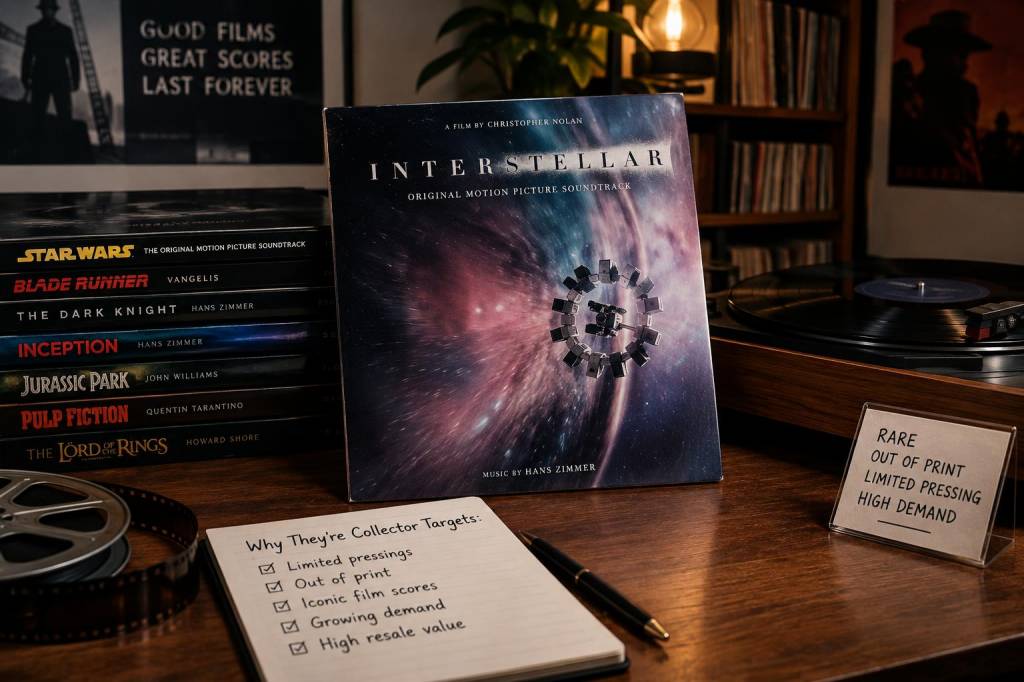
I have always found it fascinating that a film score can live two very different lives at once. On screen, it carries emotion, rhythm, and memory. On vinyl, it becomes a physical object with weight, texture, and limits. When a soundtrack release is scarce, those limits do something powerful: they turn music into a target for collectors. I have watched this happen again and again with film scores, and every time it feels like a mix of passion, nostalgia, and market pressure.
Scarcity changes the meaning of a soundtrack record. A title that once sat quietly beside hundreds of others suddenly becomes a prize. People start hunting for it, talking about it, and treating it almost like a trophy. For many listeners, that chase begins with love for a movie. For others, it begins with fear of missing out. In practice, it is usually both.
Why certain film scores vanish so quickly
Not every soundtrack gets pressed in large numbers. Labels often make a very careful guess about demand, and that guess can be conservative. A cult horror score, a prestige drama soundtrack, or a beloved sci-fi score may attract a very devoted audience, but not necessarily a massive one. That creates a strange situation: a release can be important to fans while still being small enough to disappear almost instantly.
I have seen this happen with limited editions that include colored vinyl, alternate artwork, bonus tracks, or premium packaging. Those features make the release more desirable, but they also help it sell out faster. Once copies are gone, collectors begin to feel that familiar pressure. If they want it, they may need to pay more later. That expectation alone can drive demand upward.
Sometimes scarcity is accidental. Manufacturing delays, licensing changes, or distribution problems can reduce availability without any grand strategy. Other times scarcity is part of the business model. Labels know that limited runs can create urgency, and urgency can move product. Either way, once a soundtrack becomes hard to find, it starts to behave less like a new release and more like a collectible asset.
Why film scores feel especially collectible on vinyl
Soundtrack vinyl carries a special kind of appeal because it is tied to memory. A great score is not just music I enjoy in isolation. It is music that returns me to a scene, a character, or even a period of my own life. That emotional link gives soundtrack records an edge over many other kinds of releases. Collectors are not only buying audio. They are buying atmosphere, identity, and nostalgia.
Vinyl also adds a visual and tactile layer that digital files can never match. Gatefold sleeves, liner notes, artwork, label colors, and pressing variations all matter. A soundtrack record can feel like a miniature archive of the film itself. When copies are scarce, that physicality becomes even more valuable. A collector is not simply seeking a way to listen. They are seeking the object.
There is also a strong connection between soundtrack collecting and fandom culture. Film fans often want a piece of the worlds they love, and music gives them a very direct one. A soundtrack record sits on a shelf as proof of that connection. It is visible, shareable, and emotionally loaded. That is why I think soundtrack scarcity hits harder than scarcity in some other categories. A rare jazz pressing may attract audiophiles, but a rare film score can attract both audiophiles and superfans at once.
What makes one score more sought after than another
Not every rare soundtrack becomes a major collector target. A few factors usually push certain titles into a higher tier of demand.
- Film reputation: A classic, cult favorite, or widely discussed movie usually boosts interest in the score.
- Composer reputation: Strong followings around composers can turn even a lesser-known film into a must-have release.
- Packaging quality: Special jackets, inserts, and artwork can raise desirability fast.
- Pressing size: A smaller run almost always creates more urgency.
- Sound quality: If a vinyl release is praised for mastering or cut quality, demand often rises.
- First-time release status: Fans often rush hardest when a score is getting a vinyl issue for the first time.
I have noticed that first-time vinyl issues often draw the loudest reaction. People who have waited years for a score suddenly see it arrive in a format they care about deeply. That moment creates energy, and energy creates competition. Even fans who were only mildly interested can become active buyers once they hear a release is nearly gone.
How scarcity shapes resale values
Once a soundtrack sells out, the secondary market starts doing its work. Resale prices can climb quickly, especially when the release is tied to a cult film or a respected composer. I have seen records double in value, then double again, not because the music changed, but because availability did. That can make collectors feel frustrated, excited, or both at once.
The resale market also changes behavior before a record is even gone. Buyers begin to treat a limited soundtrack as an investment. Some genuinely want to own and spin it. Others buy it mainly because they believe it will rise in value. That mix of motives can intensify shortages and make it harder for casual fans to get copies at retail price.
| Release factor | Effect on scarcity | Collector impact |
|---|---|---|
| Small pressing run | Copies disappear fast | Higher urgency and faster resale growth |
| Popular film | Broader fan demand | More competition among buyers |
| Special packaging | Stronger first-wave sales | Greater long-term desirability |
| Composer cult following | Dedicated niche demand | Stable collector interest over time |
| First vinyl release | Immediate urgency | Sharp increase in resale value after sellout |
Why collectors chase certain pressings, not just any copy
For soundtrack collectors, condition and pressing details matter a great deal. A copy from a first pressing run often carries more cachet than a later repress, even if the music is identical. Some collectors want a specific variant, a specific label design, or a numbered edition. Others care about mastering lineage and want the pressing that audio fans praise most.
I understand this instinct because vinyl collecting is not only about ownership. It is about specificity. A record from one run can feel more authentic or more historically significant than another. With film scores, that feeling is amplified by the fact that many releases are already tied to a moment in fandom history. If a soundtrack only existed in one limited form for years, that edition can become legendary.
There is also a social side to this. People post “now playing” shots, trade information in forums, and compare pressings with almost ritual seriousness. Scarcity feeds that discussion. When something is hard to obtain, conversation around it becomes more intense, and that attention can further elevate the record’s status.
What labels do when demand outruns supply
Labels know this market very well. When a soundtrack sells out fast, they may consider a repress, a deluxe reissue, or a variant edition. Sometimes that solves the problem for listeners who missed the first wave. Sometimes it creates a new wave of demand because collectors want both versions. I have seen represses reduce prices temporarily, only for original pressings to become even more desirable among completionists.
Some labels also use scarcity carefully as part of their identity. They cultivate trust by focusing on archival care, strong curation, and respectful presentation. In soundtrack circles, that reputation matters a lot. Collectors often return to labels they believe will handle a score properly, both musically and visually. In that sense, scarcity is not only about supply. It is also about confidence.
When a label announces a release, I pay attention to more than just the title. I look at pressing size, mastering details, artwork, and whether it feels like a one-time opportunity. Those clues usually tell me whether a soundtrack will remain available long enough for slower buyers, or whether it will become one of those records people mention with a kind of regret months later.
Why fans feel emotional pressure around limited soundtrack vinyl
What makes this area so compelling to me is that collector behavior is emotional before it is financial. People are not just reacting to a market signal. They are reacting to love, memory, and identity. A soundtrack tied to a formative movie can feel personally important in a way few other records do. Missing it can feel like missing a chance to preserve part of that memory in physical form.
That emotional pressure can create rushed decisions. I have bought records more quickly than I intended because I knew I would not see them at retail again. I have also watched other fans agonize over whether a high resale price is worth it. The answer depends on how much the score means to them, but the scarcity itself makes that decision harder. That is exactly why limited soundtrack vinyl has such power in collector culture.
There is a deeper truth here too: scarcity does not create desire from nothing, but it does magnify desire that already exists. A film score that people care about will always have an audience. Put it on a limited record, and that audience starts to concentrate, compete, and assign value in a very visible way. That is why some soundtrack vinyl releases feel bigger than their print runs would suggest.
In my own experience, the most memorable soundtrack records are rarely the easiest to buy. They are the ones that arrived with a sense of occasion, disappeared too quickly, and left a trail of conversation behind them. Those records become collector targets because they satisfy more than one urge at once: musical appreciation, fandom loyalty, and the simple thrill of owning something few others managed to get.