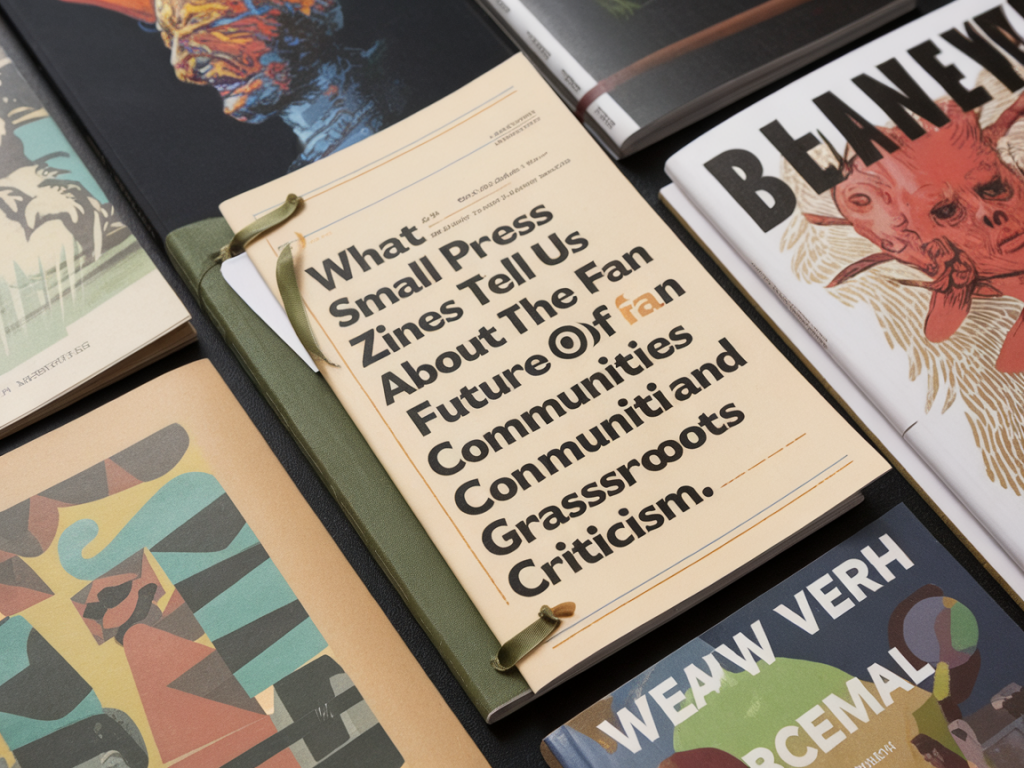
I remember the first zine I held in my hands — a photocopied, stapled booklet about a cult sci‑fi show, its margins scribbled with fan notes and a foldout map drawn by someone who clearly loved the world more than the studio ever would. It smelled faintly of cheap ink and afternoons spent at a friend’s kitchen table. That object felt like proof that fandom could be physical, deliberate, and communal in a way an algorithmically curated feed never is. Years later, as I cover fandoms across film, TV, gaming, and music for Fandomwire Co, I keep circling back to small press zines as a barometer for where grassroots criticism and fan communities are headed.
Why zines still matter in a streaming, social-media world
We live in a culture of instant takes. Twitter threads, TikTok essays, and five-minute YouTube hot takes dominate how people discuss media. Yet zines — whether printed run of 50 or a downloadable PDF — resist that tempo. They encourage depth, tactile pleasure, and a slower, more deliberate form of dialogue. When I read a zine, I’m not consuming for shareability; I’m encountering an argument, an artwork, or a personal testimony someone cared enough to craft and circulate beyond likes and retweets.
That slowness matters for two reasons. First, it allows fans to process complexity. A layered critique of character development across a season, or a meditation on representation in genre cinema, benefits from pages rather than pixels. Second, zines create artifacts — things that can be collected, traded, and archived. For fandom history and grassroots criticism, archives are how movements are traced and voices preserved.
What zine culture teaches us about community building
Zines are seldom solitary projects. Even solo zine‑makers rarely work without support: a friend proofreads, another designs a cover, someone else hosts a distro table at a con. This cooperative model stands in contrast to the isolating metrics of online fame. When I survey zine tables at conventions or indie markets, I notice a few recurring dynamics that suggest the future of fan communities:
- Interdependence over competition — zine creators trade exposure and supplies; they celebrate peers rather than fight for fleeting visibility.
- Localized networks — while online communities are global, zines often emerge from specific scenes (local queer sci‑fi fans, city‑based music collectives), strengthening place‑based hospitality and meeting points.
- Mentorship and skills transfer — older zine makers teach newer ones typesetting, letterpress, or distro logistics, preserving craft knowledge outside corporatized creative economies.
How grassroots criticism differs from mainstream critique
Criticism produced in zines tends to be personal, intersectional, and motivated by care rather than clicks. It often centers marginalized perspectives: queer readings of mainstream shows, race‑conscious takes on fantasy worlds, or accessibility critiques from disabled fans. That matters because professional criticism still skews toward outlets with institutional ties — newspapers, trade magazines, and major online journals — which can overlook how media lands in embodied, everyday lives.
Grassroots criticism also experiments with form. You’ll find hybrid pieces that mix poetry, visual collage, and annotation — modes that traditional outlets rarely accommodate. These formal playfulnesses are not mere ornament; they’re ways of making critique accessible and emotionally resonant, and they hint at what criticism will look like when it decouples from the conventions of academic essays and SEO‑optimized listicles.
Economics: small budgets, big impact
Zine economies run lean: print runs, photocopying, crowdfunding on platforms like Kickstarter or Ko-fi, and selling at zine fests or through community distro networks. That DIY model keeps gatekeeping low. You don’t need a press pass or a byline to publish. But there are tradeoffs — creators often work unpaid, and physical distribution remains a barrier for some. The challenge for the future will be maintaining this DIY ethos while securing sustainable practices.
| Revenue Methods | Pros | Cons |
|---|---|---|
| Print sales at events | Direct fan connection, immediate feedback | Limited reach, event-dependent |
| Digital PDFs/downloads | Wide distribution, low cost | Less tactile, piracy risk |
| Crowdfunding (Kickstarter, Patreon) | Upfront funding, community buy-in | Platform fees, creator labor overhead |
| Bundled distro / co‑ops | Shared resources, cross-promotion | Coordination costs |
What mainstream media and publishers can learn
Big outlets are starting to notice the depth and authenticity of zine communities. Some publishers have created indie imprints or solicited zine writers for columns — a welcome exchange if it doesn’t extract without reciprocation. The lessons are clear:
- Invest in long‑form, emotionally nuanced criticism, not just punchy headlines.
- Compensate creators fairly when drawing on zine culture — paid commissions, shared revenue for reprints, and editorial support that respects voice.
- Support physical culture: sponsor zine fests, fund micro‑grants, and invest in distribution co‑ops instead of only buying the rights to repurpose content.
Technology as an enabler, not a replacement
Zine creators are savvy with tech, using platforms like Etsy, Big Cartel, and Bandcamp to sell work, or Mastodon and Discord to build community. But technology functions as tool rather than destiny. The future of fan communities will likely be hybrid: Discord threads that lead to print runs, PDFs that inspire photocopied chapbooks, podcast episodes that spawn illustrated zines. Platforms can amplify reach, but they don’t supply the care and craft that make zine culture durable.
Signs I’m excited about
At recent events I’ve noticed some hopeful trends:
- More collaborations across fandoms — zines that bring together game designers and film critics, or translations that bridge language barriers.
- Accessibility and inclusion baked into production — captioned PDFs, tactile editions, and sliding-scale pricing.
- Archive projects partnering with libraries and universities to preserve zine runs, ensuring that grassroots histories aren’t lost to ephemeral feeds.
When I flip through a zine table now, I don’t just see nostalgia for paper; I see experiment, resistance, and an ethic of care. Zines remind us that criticism is not only adjudication but also conversation and community‑building. They show that fandoms can be self‑sustaining, generative spaces that value depth over virality. If we want healthier fan cultures and richer critical ecosystems, paying attention to the small press — and supporting it — is a practical, immediate step.