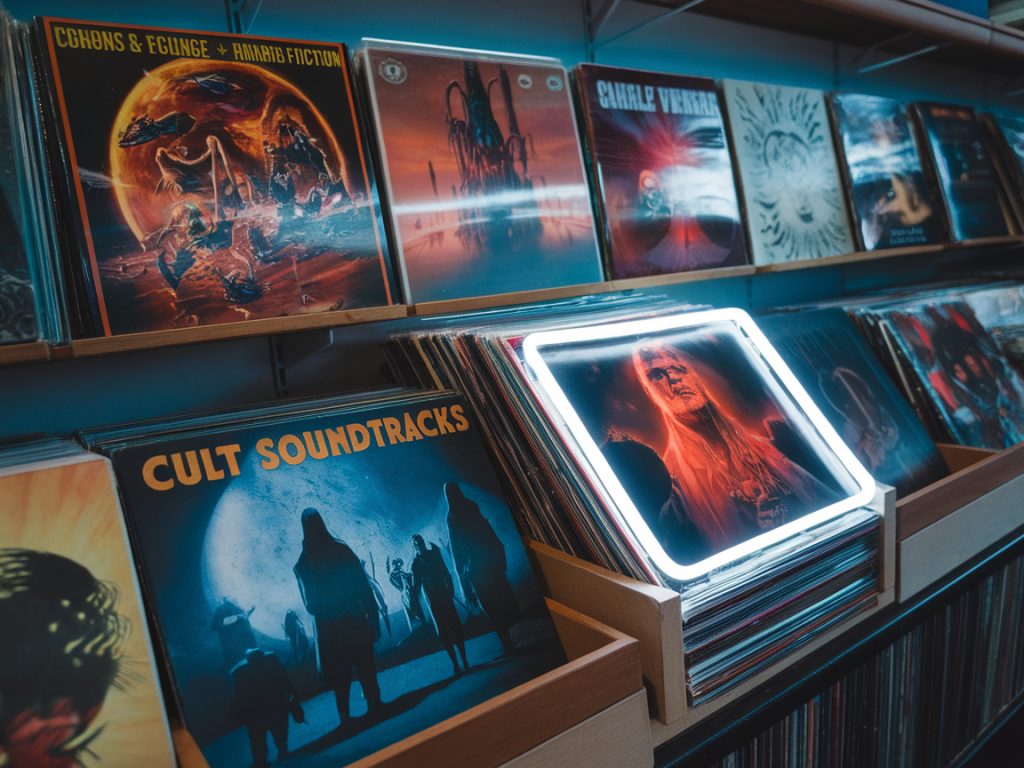
Over the past few years I've watched a surprising new player show up at record fairs, auction sites and private sales: investors with little visible connection to movie or music fandom snapping up limited-run vinyl reissues of cult soundtracks. These aren't the latest Taylor Swift clear-vinyl bundles or deluxe box sets from mainstream composers — they're small-batch pressings of obscure horror scores, synth-heavy sci-fi soundtracks, and long-out-of-print composer catalogs pressed by boutique labels like Mondo, Waxwork Records, Death Waltz, or specialty divisions of legacy houses such as La-La Land and Varese Sarabande.
At first glance this trend feels counterintuitive: why would someone outside of fandom bet money on a 500-copy pressing of a 1980s European synth score? As someone who's spent years covering both fandom culture and the business side of music, I've started tracing the mechanics behind this behavior. The answer sits at the intersection of scarcity economics, cultural cachet, cross-asset investing, and a changing marketplace that makes niche physical media easier to trade and value.
Scarcity and the new rarity premium
One of the simplest drivers is scarcity. Labels producing soundtrack reissues know that part of their audience are collectors, so they deliberately limit runs — numbered editions, exclusive variants (blood-splatter, glow-in-the-dark, picture discs), and retailer-specific pressings. That scarcity creates a collectible market where demand can far exceed supply.
For an investor looking for non-correlated assets, a limited vinyl run is attractive because it can be easy to understand: fixed supply, observable past sales, and a hobbyist community that values ownership. Platforms like Discogs, eBay, and newer marketplaces tailored to collectibles provide price histories and liquidity signals. That data comforts buyers who might be uncomfortable purchasing more opaque collectibles like art or antiques.
Branding and boutique label credibility
Not all soundtrack reissues are created equal. The boutique labels I've mentioned have cultivated a reputation for quality curation, mastering, and presentation. A release by Mondo with custom artwork from a respected illustrator or a lacquer cut by a well-known mastering engineer is perceived as premium — and premium translates to stronger resale potential.
Investors are sensitive to provenance. Releases tied to recognized names (e.g., John Carpenter, Ennio Morricone, Goblin) or high-profile restorations gain interest faster. But boutique labels have also learned to create their own provenance: limited runs, certificate of authenticity, and carefully timed launch events. That marketing turns a soundtrack into a collectible object with an identity beyond the music itself.
Cultural crossovers and nostalgia cycles
Soundtracks are uniquely positioned at the crossroads of music, cinema and nostalgia. As pop culture cycles through revivals — retro synth aesthetics, 80s horror resurgences, or rediscovered cult directors — soundtracks act as a tangible anchor for those trends. Investors who recognize a cultural moment can anticipate increased interest in related artifacts.
For example, when a cult film gets a sequel, a streaming resurgence, or viral attention on social media platforms like TikTok, the soundtrack often benefits. An obscure synth score that soundtracked a late-night VHS cult hit suddenly gains rediscovery traffic. Investors outside the fandom world are increasingly comfortable betting on these cycles because they can monitor cultural signals in real time.
Speculation as a diversification strategy
Financially, niche vinyl reissues fit into a broader appetite for alternative investments. When traditional markets feel overheated, collectors' markets — sneakers, trading cards, watches, vinyl — gain attention as diversification options. The entry price for many soundtrack pressings is relatively low (often under £100 on release), which allows investors to buy multiple titles across different niches and hope one appreciates significantly.
For these investors, the math is simple: low initial outlay, the possibility of a high multiple on resale, and plenty of outlets to liquidate. That makes soundtracks an attractive experimental asset class on par with other hobby-driven investments.
Marketplace infrastructure and transparency
The normalization of marketplaces has been critical. Discogs provides price histories, edition details and seller ratings; eBay offers global reach and bidding mechanics; StockX-style marketplaces for collectibles bring authentication and transparent sale tracking. This infrastructure reduces information asymmetry and makes valuation less of an art and more of a data-driven exercise.
Additionally, auction houses and specialist dealers increasingly list vinyl in their catalogs, lending further legitimacy and liquidity. That institutionalization lowers the friction for investors who want verifiable exits.
Risks investors often underestimate
Despite the upside, there are real pitfalls. I see investors underestimate:
Understanding these risks requires either fandom fluency (knowing which composers or films have enduring demand) or hiring expertise from dealers and grading services.
How fans and new investors can approach this market
If you're a fan reading this, the good news is you don't have to abandon enthusiasm to participate. Here are practical approaches I've seen work:
Examples that illustrate the phenomenon
I've tracked several cases where non-fan investors have made notable gains. For instance, early Mondo pressings of synthesized horror scores (think John Carpenter-adjacent aesthetics) that debuted at £40–£60 have, after the film's renewed cultural visibility, traded for £300–£600. Waxwork Records releases tied to restored cult horror titles similarly spiked when the films were revived on streaming services or got anniversary screenings.
| Release | Initial Price | Peak Resale (approx.) | Driver |
|---|---|---|---|
| Mondo — Synth Horror OST (2016) | £45 | £450 | Director renaissance + limited 500-copy run |
| Waxwork — Cult Slasher Reissue (2018) | £30 | £220 | Anniversary screening + collector variants |
| La-La Land — Composer retrospective (2014) | £60 | £180 | Composer rediscovery and critical reappraisal |
These aren't guaranteed outcomes, but they highlight patterns: small supply + cultural momentum + recognized branding = investor interest.
What this trend means for fandoms
The influx of outside money has mixed effects. On the positive side, it validates the cultural importance of these works and can fund better reissues with improved mastering and packaging. On the negative side, it can price out casual fans who just want to own a piece of a film they love. I've seen heated discussions online where longtime collectors resent speculators who flip items quickly for profit.
As someone who cares about both culture and commerce, I think the healthiest path is transparency: labels, retailers and secondary marketplaces being clear about pressing numbers and future reissue plans, and collectors being informed about what's likely a long-term collectible versus a transient fad.
For investors, soundtrack vinyl offers an intriguing blend of cultural signal and collectible mechanics. For fans, it's a reminder that tangible media still matters and that their enthusiasm — whether driven by love or speculative interest — is part of a broader ecosystem reshaping how we value music tied to stories.