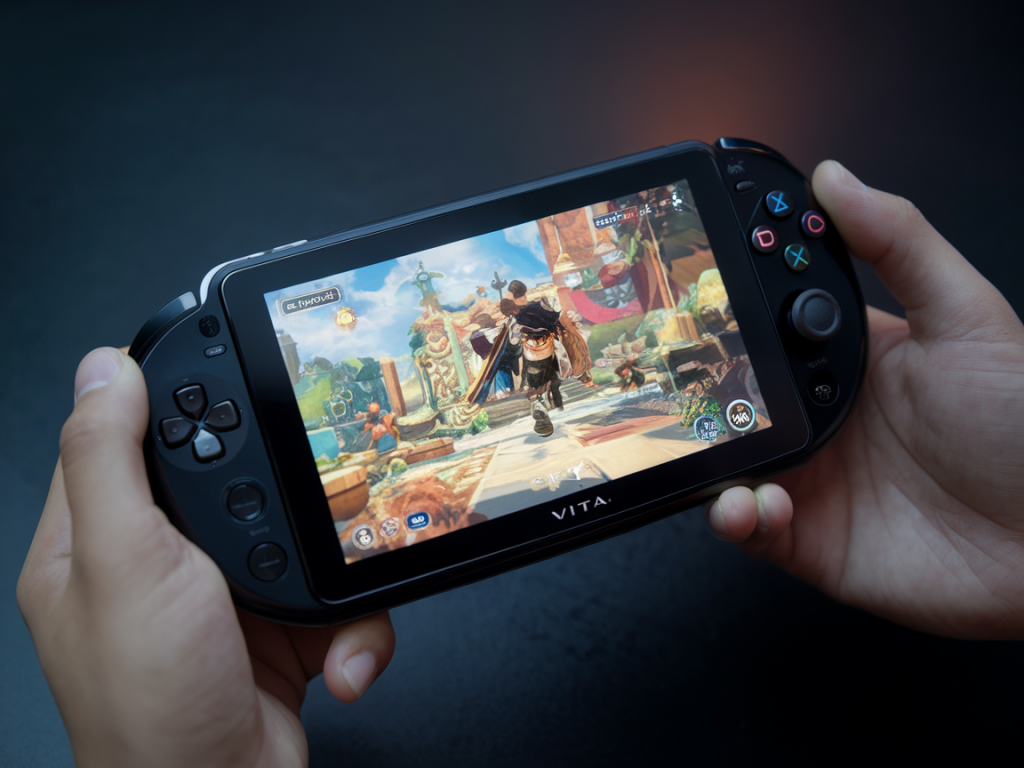
I spent the last two weeks trying to live with Sony’s new PlayStation handheld as my primary on-the-go gaming device — swapping it in for my PS5 at times, taking it on commutes, and forcing it into backyard chill sessions. I wanted to know one thing: is it actually worth switching from a console if you’re a gamer who needs portability? The short answer is complicated, but here’s what I learned in practice.
First impressions and build quality
The device feels unmistakably PlayStation: matte plastic where it needs to be grippy, glossy accents that catch the light, and buttons that click with familiar PS precision. The ergonomics surprised me — it’s lighter than I expected and sits nicely in my hands for hour-long sessions. Thumbstick placement and trigger travel are comfortable, though if you’re used to the heft of a DualSense, the handheld’s triggers feel a touch shallower.
Screen quality is one of the big wins. The panel is bright, colors pop, and HDR support (when implemented by games or streaming) adds an extra sheen to spikes and special effects. I tested it outdoors on a sunny afternoon and, while glare is inevitable, it was still perfectly playable with brightness cranked.
Performance and how games actually run
Performance is where expectations matter. This handheld is not a PS5 in a tiny box — it’s a different approach. Native handheld-optimized titles run beautifully: crisp framerates, reliable load times, and tactile rumble that sells immersion. When playing full PS5 games via remote play or cloud-streaming, the experience depends heavily on network quality. Over a robust Wi‑Fi 6 connection at home, I could stream PS5-only games with very little lag. On my 5G hotspot during a train ride, input lag crept in unpredictably and textures loaded slower.
A note on thermal management: the unit warms up under sustained load, but never uncomfortably so. Battery drain is the trade-off — pushing high settings shortens sessions. In practice, I got around 3–5 hours of mixed usage (indie titles and some streamed AAA), which means you’ll want a portable charger or to plan short bursts unless you can plug in.
Controls, haptics, and the DualSense relationship
Sony didn’t include the full DualSense experience (adaptive triggers are limited on many handheld builds), but haptics have been scaled down thoughtfully. Vibration patterns still add texture to driving games and platformers. If you’re coming from a DualSense and expect identical feedback, you’ll notice differences, but nothing that ruins immersion.
One pleasant surprise: the handheld supports pairing with a DualSense or other Bluetooth controllers. That’s useful if you want a couch experience from a handheld docking setup, or for longer sessions where the handheld’s form factor becomes uncomfortable.
Library and backward compatibility
Where this device shines is the PlayStation ecosystem. You can tap into a vast library of PlayStation exclusives, indie hits, and backward-compatible titles (depending on how Sony structures access). Some developers have optimized older PS4/PS5 games for the handheld, improving UI, adjusting resolutions, and ensuring button mappings make sense on a smaller screen.
However, not every title is equally suited for handheld play. Games that rely heavily on tiny HUD elements, complex menus, or precise aiming can feel cramped. Developers are paying attention to this, but it’s a gradual process — expect a mixed bag in the early months.
Battery life and charging
Battery life is the perennial handheld sticking point. With brightness at about 60%, moderate volume, and a mix of native and streamed games, my average session time was just under four hours. Turn on aggressive power-saving modes and reduce frame rates when possible, and you can push closer to five. That’s fine for commutes and short sessions, but not for marathon play.
Charging speeds are reasonable. If you’re switching from a console that you leave plugged in, remember to invest in a USB-C PD power bank if you want full-day portability. The device supports pass-through charging, so you can charge while playing, which is a must-have feature for long trips or flights.
Connectivity and streaming
Remote Play and cloud streaming are central to the handheld’s value proposition. Over a solid home network, I enjoyed virtually lag-free remote play of my PS5, with the handheld acting as a wonderfully portable screen. Outside the home, results varied: 5G on a strong carrier and low latency servers allowed acceptable streamed gameplay, but any packet loss translated quickly into stutter or control lag.
Wi‑Fi 6 and Ethernet via a USB-C dock help future-proof the experience. If you travel a lot and depend on hotel Wi‑Fi, plan to rely more on downloaded and handheld-native titles than on streaming.
Price and ecosystem value
Price is the obvious question. If you already own a PS5, the handheld feels like an extension — a way to access your library on the go and play certain exclusives anywhere. If you’re a console-less gamer weighing this device against a PS5, the calculation is different. You’ll sacrifice raw power, some exclusive features, and the full living room experience. If portability is your priority and you value Sony’s library, it may be worth it. If you want the best visual fidelity and performance, a PS5 remains the core purchase.
Who should switch?
- Switchers I recommend it for: commuters, frequent travelers, and people who value portability over graphical fidelity. If you love playing AAA story games on the go or want a device to take to friends’ homes, it’s a compelling pick.
- Not for: players focused on maximum performance, 4K HDR TV sessions, or those who rarely leave their living room. Also, budget-conscious gamers who need to decide between a PS5 and a handheld should weigh which experience matters most.
- Maybe for hybrid users: folks who own a PS5 and want a relaxed, portable way to dive back into their library. The handheld complements a console well rather than fully replacing it.
How it compares to other handhelds
Comparisons are inevitable. Against dedicated PC handhelds like the Steam Deck, Sony’s device offers tighter integration with PlayStation services and a more polished first-party library. The Steam Deck wins on raw performance and modability. Against Nintendo’s Switch, Sony’s handheld feels more powerful and aimed at older, performance-focused audiences, while the Switch still wins at family-friendly local multiplayer and battery longevity on some titles.
| Feature | PlayStation Handheld | Steam Deck | Switch |
| Best for | PlayStation ecosystem on the go | PC gaming portability | Casual/local multiplayer |
| Battery | 3–5 hours | 2–8 hours (varies) | 4–9 hours |
| Native AAA performance | Good for optimized titles | Very good (PC settings) | Limited |
Practical tips if you decide to switch
- Buy a good USB-C power bank — battery will be your biggest limiter.
- Test remote play at home before relying on it on the road; settings can make a big difference.
- Download a mix of native and cloud-enabled titles to hedge against poor network conditions.
- Use a carrying case that supports a small dock or stand if you plan to play on trains or in cafes.
After living with the new PlayStation handheld, I view it as a powerful, polished companion device rather than a full replacement for a console. It opens up new ways to play, makes Sony’s library more accessible, and brings many of the company’s best games into a genuinely portable form. But there are trade-offs in battery life, raw power, and some missing DualSense features. If portability is a core need, it’s absolutely worth serious consideration. If the living room experience and uncompromised performance are your priorities, you’ll probably want to keep the PS5 at the center of your setup.