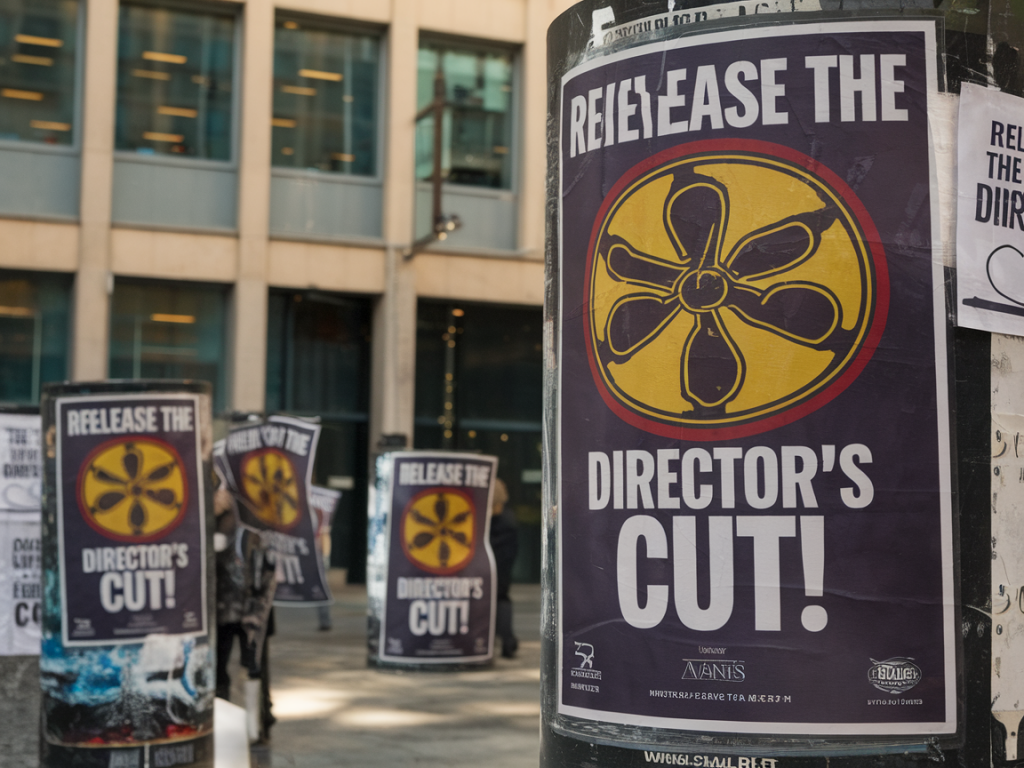
I’ve watched a lot of fan campaigns over the years — from polite petitions to full-blown internet revolutions — and one question keeps coming up in conversations with readers and fellow fans: can a grassroots fan campaign realistically convince a streamer to release a show’s director’s cut? Short answer: sometimes. But the real answer lives in a tangle of creative control, legal rights, economics, and how effectively a fandom can translate passion into measurable value for a streaming platform.
Why streamers care (or don’t)
Streaming services aren’t movie studios in the traditional sense: they’re subscription businesses whose primary metric is retention and acquisition. When you ask a streamer to release a director’s cut, you’re asking them to allocate engineering, marketing, and rights-clearance resources to a version of a product that likely already exists on their platform. For a request to move from fan wishlist to executive decision, it needs to solve a problem for the streamer — or at least offer a clear upside.
Here’s what usually matters to streaming execs:
- Subscriber impact — Will this release attract new subscribers or keep current ones from churning?
- Cost — How expensive is it to prepare, clear, and host the director’s cut?
- Rights and permissions — Do the filmmakers, studios, and any music or third-party rights holders agree?
- PR upside vs. risk — Does this generate good press and social media buzz, or risks reigniting controversy?
- Platform fit — Is this content aligned with the streamer’s brand and content roadmap?
Case studies that shaped expectations
The most cited success story is the #ReleaseTheSnyderCut campaign. That movement began in earnest after Justice League (2017) disappointed many fans, and over several years, it turned into a cultural force. For HBO Max (then under WarnerMedia), releasing Zack Snyder’s director’s cut in 2021 made sense: the studio had already invested in post-production elements, Snyder’s cut was distinct enough to be billed as an event, and it offered a premium promotional moment for their then-new streaming service.
But that’s an atypical win. It helped that Warner had both the rights and the means to assemble the cut without complex third-party negotiations, and that the studio believed in the PR value. Many other campaigns — petitions for alternate cuts of TV shows or theatrical films — stalled because the legal or financial hurdles were too high.
Smaller, pragmatic wins happen more often than you’d think: directors’ cuts or extended editions appear on Blu-ray or as exclusive content on niche platforms where the cost-benefit is clearer. Sometimes streamers add bonus features — commentary tracks, deleted scenes — rather than full alternate cuts, because those are cheaper and still reward the fans.
What a successful fan campaign looks like
From what I’ve seen, a campaign that actually moves the needle shares some common traits:
- Clear ask — Fans specify exactly what they want: a full director’s cut, an extended season finale, or just deleted scenes and commentary.
- Measurable leverage — Demonstrable metrics, like sustained social media engagement, petition signatures from unique users, or organized subscriber churn threats (e.g., coordinated pauses), are more persuasive than a hashtag spike.
- Coalition-building — Support from creators (directors, showrunners), talent, or influencers amplifies legitimacy.
- Realistic framing — Campaigns that understand platform constraints and propose phased asks (start with a remastered version or bonus feature) usually do better.
- Media traction — Coverage in outlets beyond fan spaces raises the PR value for the streamer.
Practical steps fans can take
If you’re part of a fandom thinking of launching a campaign, here’s a roadmap I’d recommend based on what’s worked and what hasn’t:
- Define the exact deliverable: director’s cut, extended episode, or behind-the-scenes extras.
- Research ownership and rights: who owns the show/film and who controls the cut? Publicly available credits and studio press releases can give clues.
- Gather metrics: show weekly viewership trends (if available), petition signatures, and social engagement across platforms. Use these to demonstrate potential subscriber impact.
- Reach out to creators/talent: even a short public statement of support from the director or lead actor can change a conversation internally at a streamer.
- Pitch incremental asks: if a full cut is unrealistic, propose a limited-time release, a “director’s commentary” edition, or a physical Blu-ray release handled by the studio’s home-video arm.
- Engage press: targeted pitches to entertainment outlets can frame the story as more than a fandom tantrum — and that can attract streamer attention.
Barriers you’ll likely face
Even the smartest campaigns run into real obstacles:
- Rights fragmentation: Music, archival footage, and actor contracts often include clauses for different cuts. Clearing these can be costly or legally impossible.
- Budgets: Restoring footage, re-editing, and remixing sound can be expensive. Streamers may balk if the projected return doesn’t justify the spend.
- Creative disagreements: Directors and studios don’t always agree on what constitutes a “director’s cut.” If the filmmaker doesn’t have the original assets or final say, the cut might not exist in a releasable form.
- Strategic priorities: Platforms juggle billions in content spend. A director’s cut for a niche show may not be a strategic focus compared to new originals or licensing deals.
How to measure success
It’s tempting to treat the end goal as a yes/no outcome, but success can come in many forms. Here are metrics and milestones that indicate real progress:
- Public support from the director or key cast members.
- Press coverage beyond fandom sites (national outlets, trade press).
- Direct acknowledgment from the streamer — even a stock response from PR is progress.
- Observable increases in social engagement or searches that a streamer can present as acquisition value.
- Release of partial material (deleted scenes, commentary, featurettes) as a stepping stone.
Examples of creative leverage
Fans don’t need to reinvent the wheel. Creative, low-cost pressure can be effective:
- Organize watch parties for the existing version to show continued engagement.
- Create high-quality fan analyses or edited compilations that highlight what a director’s cut would offer — good storytelling can change minds.
- Coordinate charity tie-ins: offer to donate petition proceeds or host fundraising that includes talent involvement to highlight positive PR outcomes.
When to accept a compromise
In many situations, asking for everything is the quickest path to getting nothing. If a streamer offers deleted scenes, a director commentary, or a limited-time “assembly cut,” it can be a meaningful win: it satisfies fans, creates promotional momentum, and costs the streamer less. I’ve learned to value these incremental wins; they set precedents and sometimes open doors for bigger releases down the line.
| Factor | What streamers consider |
|---|---|
| Subscriber impact | Will it drive sign-ups or retention? |
| Cost | Editing, restoration, music and talent clearances |
| Rights | Is the cut legally releasable without new agreements? |
| PR | Does it generate worthwhile buzz or risk controversy? |
I’ve sat through panels where executives admitted they sometimes greenlight releases based less on petition numbers and more on whether a campaign reveals an active, monetizable audience. That’s the heart of this: fandom passion matters, but it becomes persuasive when translated into clear, business-oriented signals the platform can act on.