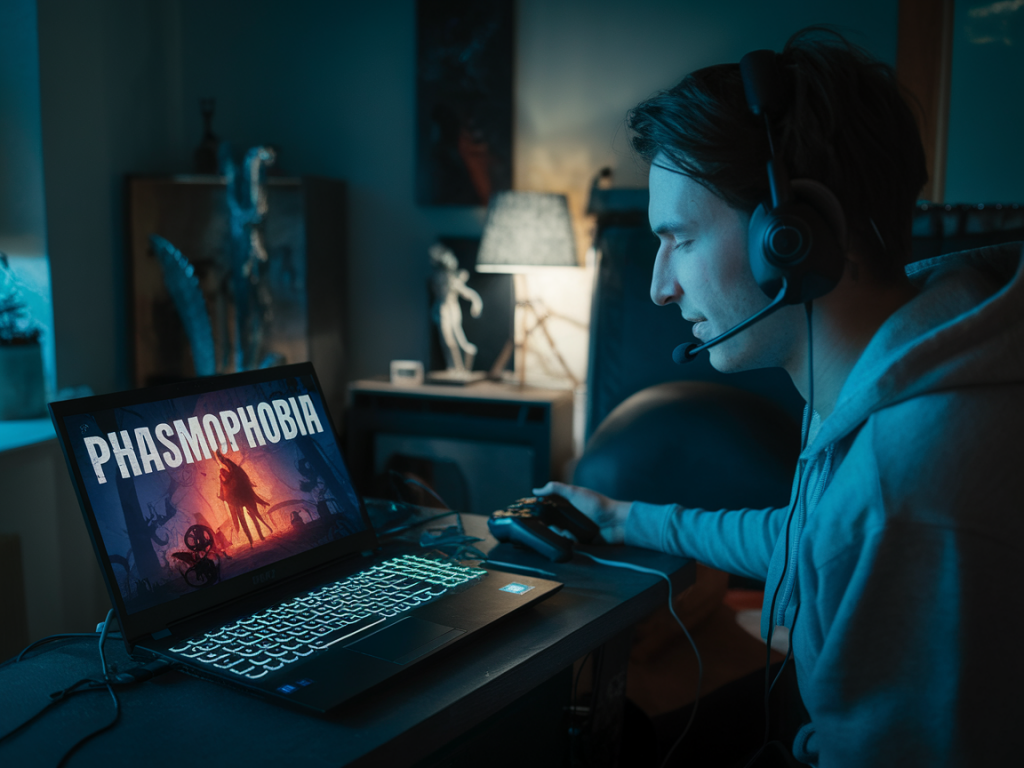
I remember the first time I booted up Phasmophobia. It wasn’t the most polished tutorial or an intricate combat system that kept me there — it was a single, simple moment: the way my flashlight beam trembled as I stepped into a darkened hallway, and the static-y whisper over my headset that might have been a ghost or just my friend messing with me. That uncertainty, that shared spike of adrenaline, is what indie horror games like Phasmophobia trade on. They often look deceptively simple on paper, but they keep players coming back by building tension, community, and emergent stories out of a handful of mechanics.
Why simple systems can feel so much bigger
When people ask me why a game with no deep skill tree or flashy graphics can be so addictive, I point to one word: focus. Indie horror tends to strip away extraneous features and center the experience around a core loop — investigation, reaction, and consequence. Phasmophobia’s fundamentals are straightforward: enter a haunted location, use a few tools (EMF reader, spirit box, thermometer), collect evidence, and identify the ghost. But because every tool is tied to suspenseful, sensory feedback (a cold spot, a breath on the microphone, an errant footstep), those basic actions become loaded with meaning.
That focus creates clarity. Players aren’t juggling dozens of UI elements or complex build options; they’re paying attention to sounds, to other people’s reactions, and to small environmental clues. It’s this concentration that amplifies every creak and whisper.
The power of social play
One of the biggest engines behind Phasmophobia’s longevity is the social layer. The game lets friends share the experience in real time — and that multiplies the fear. Fear shared is social currency: you trade jump scares, you laugh nervously, you accuse each other of faking evidence. I’ve played sessions where the gameplay itself could be summarized in a single sentence, but the storytelling that unfolded among teammates lasted much longer.
Social dynamics do several things for these titles:
Atmosphere, not spectacle
Indie horror often trades high-budget spectacle for meticulous atmosphere. Consider sound design: a poorly timed footstep, a distant laugh, or a sudden silence can do more work than a jump-scare model that snaps into place. I’ve found myself more unsettled by subtle audio cues in Phasmophobia and similar titles than by CGI-heavy horror cutscenes in bigger-budget games.
Visuals can also be minimalist but evocative. A flickering light or a smear of motion in the corner of the screen asks the player to fill in the blanks. Our brains are brilliant at completing patterns, often in scarier ways than developers could script. Indie devs exploit that psychological gap — they show just enough to hint at danger and let our imaginations supply the rest.
Low barrier to entry, high emotional payout
Part of why indie horror games spread so quickly is accessibility. Phasmophobia’s controls are intuitive; you don’t need hours of grinding to be effective. That low barrier invites a broad audience: streaming creators, casual players, and hardcore horror fans alike. When a game is easy to pick up, it’s easier to recommend and more likely to be streamed, which in turn fuels discovery and community growth.
And because emotional reactions are the core reward, not progression points, players feel satisfied by a single, memorable session. A brutal boss with a long learning curve can be rewarding in a different way, but the quick, intense emotional spikes in indie horror are often more shareable and immediate.
Emergent gameplay and player-driven stories
Indie horror titles benefit from systems that produce unexpected outcomes. Phasmophobia’s AI-driven ghost behaviors, combined with tools that interact in simple but unpredictable ways, make each investigation unique. That unpredictability is a designer’s dream because players don’t just consume content — they create stories. I still watch and re-watch clips of people solving mysteries or panicking as the lights go out because those moments feel handcrafted by the players themselves.
When emergent events happen, players document them. That documentation — clips, memes, fan art — becomes self-sustaining promotion. The community archives its own best moments and references, creating deep familiarity and in-jokes that encourage repeat sessions.
Updating, supporting, and listening to the community
Another reason indie horror games stay relevant is that their developers often iterate rapidly and remain closely connected to players. Phasmophobia’s devs pushed updates, added new maps, and tuned mechanics based on player feedback. That responsiveness builds trust. When players feel seen, they invest more time and energy into the experience.
Contrast that with big-studio releases that can feel static or slow to respond. Indie teams, especially those who engage on Discord or social channels, can take a player suggestion and have it in the game in a few weeks. That loop of feedback, update, and renewed interest keeps communities engaged and makes the game feel alive.
Streamability and the influencer effect
We can’t talk about modern indie horror without mentioning streaming. Games like Phasmophobia are tailor-made for content creators because they produce shareable moments: live scares, chaotic teamwork, and unscripted humor. Streamers want content that generates reactions, and viewers want to be part of that reactive experience. This symbiosis accelerates popularity faster than traditional marketing ever could.
When a popular streamer screams into their mic, millions of viewers experience the game vicariously. That immediate social proof leads to spikes in player numbers. More players mean more clips, more memes, and more reasons for others to jump in and try the game themselves.
Why I keep coming back
For me personally, the appeal of indie horror is that it offers a concentrated dose of emotion and story without pretense. I don’t need a sprawling lore bible to be frightened or invested. A half-hour session can leave me breathless, laughing, and already planning the next run. I love tuning into a community’s highlight reel, then making my own contributions — a new clip, a joke, a strategy. That loop of personal experience feeding communal storytelling is powerful.
It’s not that mechanics are unimportant — clarity and polish matter — but in indie horror the mechanics exist to provoke reaction and collaboration, not to obfuscate them. When a simple tool like a spirit box can generate a thousand user stories, you realise that depth in games doesn’t always equate to complexity. Sometimes, all it takes is the right setup to let players and their imaginations carry the rest.